

In guitar sound, “distortion” is a form of expression that directly reflects the player’s emotions. One of the key elements that shapes this distortion is the choice of preamp tube (12AX7).
In this article, with PASVANE EL84 power tubes fixed, we thoroughly compare three types of preamp tubes — TAD, Tung-Sol, and Mullard — across both the LEAD and ULTRA channels, focusing on the unique “expressions” of each sound.
“Can a single tube really make this much difference?”
With that sense of surprise, experience the moments where “sound begins to sing” — through both graphs and your own ears.
🔧 Comparison Conditions (All Variables Matched)
In this comparison, all factors except the pickup were kept identical, allowing the differences in sound to be evaluated purely based on the individual character of each tube. The recording and analysis setup is as follows:
- 🎸ピックアップ
EMG81 AHB-1n - 🔊 アンプ
Hughes & Kettner GrandMeister Deluxe 40
(LEADチャンネル/ULTRAチャンネル/ブーストON) - ⚡ パワー管(固定)
TAD EL84M - 🧩 プリ管(比較対象)
TUNG-SOL 12AX7(V1〜V3/双極マッチ)
Mullard CV4004/12AX7 (V1〜V3)
TAD V1 E83CC(スロバキア) V2.V3(TAD ECC83cz) - 🎚 録音方式
REDBOXラインアウト → オーディオインターフェース直結
(DAW:Logic Pro) - 🔬 解析ツール
SPAN
| 項目 | 設定値 |
|---|---|
| Tool | SPAN Free / Block 4096 / Overlap 70% |
| Display | FILLED + Anti-Alias / Slope 4.5 |
| Range | –78dB to –18dB / 20Hz–20kHz |
🔬 SPAN設定(解析条件)
🔎 AVG または MAX 設定を使用する理由(掲載用テキスト)
本記事では、解析の目的に応じて AVG(平均)または MAX(最大保持)表示 を使い分けています。
ピックアップや真空管の特性は、一瞬だけ現れるピーク成分や倍音の跳ねに強く表れるため、
そのような瞬間的な変化を確実に捉える必要がある場合は MAX表示 を使用しています。
一方で、フレーズ全体の平均的な音響傾向や帯域バランスを確認する目的では、
極端なピーク成分に左右されにくい AVG表示 を使用しています。
つまり本記事の解析では
「音のキャラクターを見るときは MAX」、「全体傾向を見るときは AVG」という基準で表示方式を選択しています。
本比較テストでは、アンプの設定を以下の通りすべて統一しました。
これにより、音の違いは真空管そのもののキャラクターによるものです。
🎛 アンプのセッティング
- Master Volume:8時〜9時
- Resonance:12時(5)
- Presence:12時(5)
- Treble:12時(5)
- Middle:12時(5)
- Bass:12時(5)
- Volume:12時(5)
- Gain:12時(5)
- Boost:ON
🎨 Line Color Analysis (ULTRA Channel)
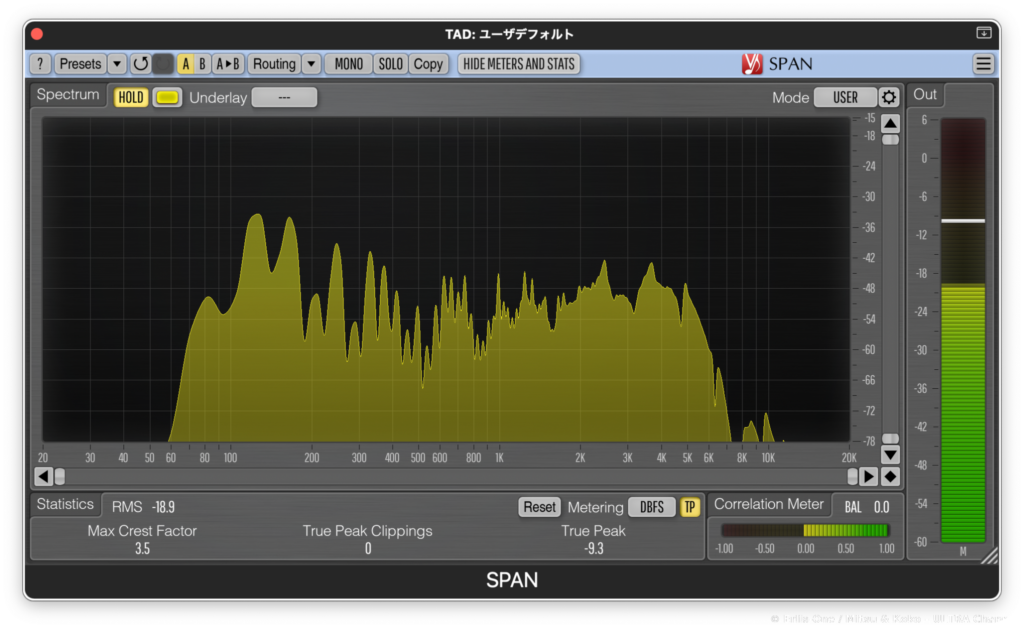
🟡 TAD SET (ULTRA Channel) – Sound Characteristics
- Low (–120Hz):
Overall, a rounded and stable low-end, functioning more as a solid foundation than deep rumble.
→ More “supportive” than “enveloping.” Clear core, with no muddy lows. - Low-Mid (200–600Hz):
A slightly tight peak structure, prioritizing clarity of contour over sheer density.
→ The mids step forward naturally. Stays present without collapsing in backing parts. - High (1kHz–5kHz):
Clearly defined peaks with sharp picking response, yet never harsh to the ears.
→ Good cut without harshness. A well-balanced and usable presence range. - Overall Impression:
Slightly bright, but never edgy. A controlled forward character.
When paired with PASVANE’s deep-sounding EL84, it tightens the overall sound image.
→ Excellent for fast attacks and solid, structured tones. Ideal for shredding and tight riffs.
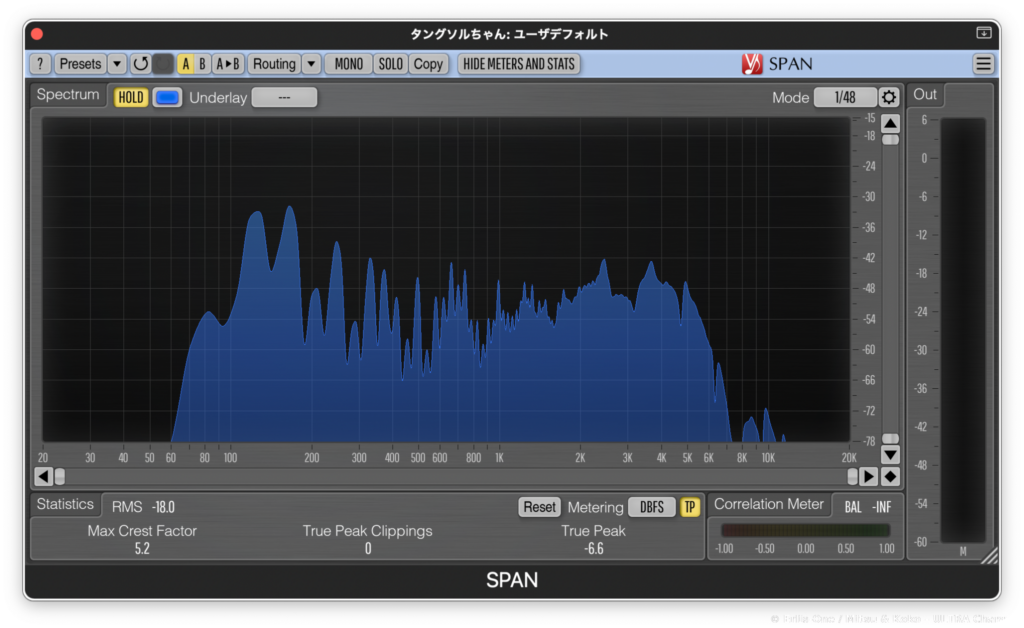
🔵 Blue Line: Tung-Sol Preamp Tube (ULTRA)
Low (–120Hz)
A gentle rise with a stable center of gravity that feels like it sinks naturally.
→ Enveloping low-end that spreads through space rather than pushing up from below.
Low-Mid (200–600Hz)
Soft peak shapes with a dense and thick core tone.
→ Never harsh in backing, with a natural and warm midrange bloom.
High (1kHz–5kHz)
Attack is present but never sharp, extending smoothly and gently to the ears.
→ A natural presence range without any aggressive edge.
Overall Impression
A darker-leaning tone that pairs perfectly with PASVANE’s deep-sounding EL84.
→ A sound full of calmness, depth, and breathing space. Works equally well for leads and riffs.
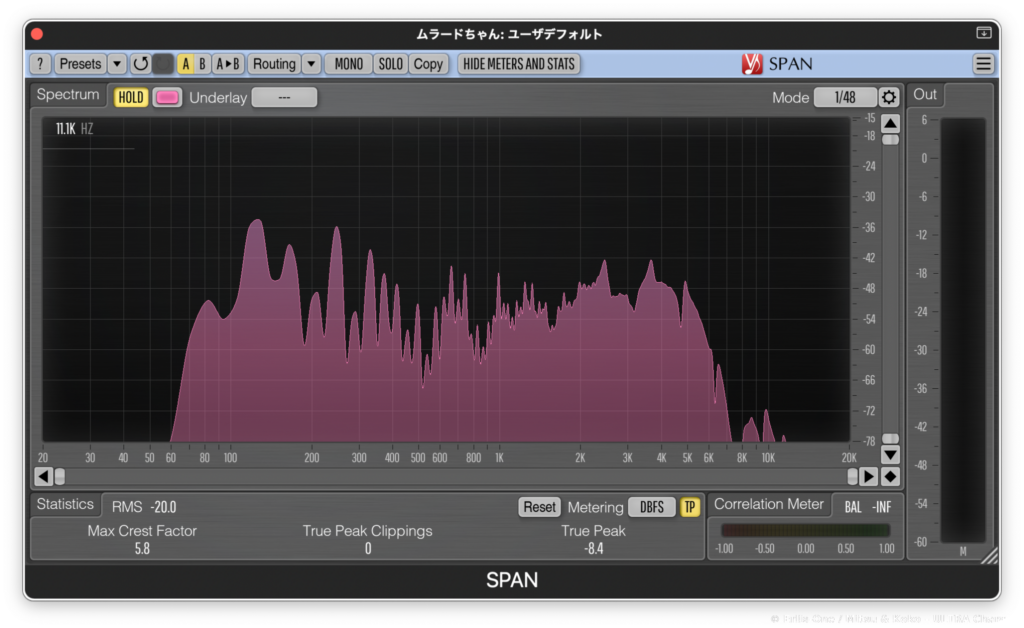
💗 Pink Line: Mullard Preamp Tube (ULTRA)
- Low (–120Hz)
More about stability than sheer boost, resulting in a calm and understated low end.
→ Shallow low-end depth, but a solid and reliable foundation. - Low-Mid (200–600Hz)
Smooth contours where harmonics blend naturally together.
→ A midrange that sings beautifully. Perfect density for riffs and melodic lines. - High (1kHz–5kHz)
Peaks are gently leveled, giving an extremely soft and refined feel.
→ Rounded attack and a classy tone without harsh edges. - Overall Impression
Even more “moist” and smooth than Tung-Sol, with plenty of air and space.
→ Ideal for emotional lead playing and expressive chord work.
| Category | 💗 Mullard (Mura-chan) | 🔵 Tung-Sol | 🟠 TAD (JJ Set) |
|---|---|---|---|
| Center of Gravity | Solid and stable. Shallow depth but excellent support | Low and deep, with an enveloping low end | Focused on low-mids. Firm and supportive lows |
| Midrange Texture | Moist and smooth. Harmonics blend naturally | Round and soft. Dense but never harsh | Clear contours. Prioritizes cut and clarity |
| High-End Character | Soft and refined, very easy on the ears | Smooth and gentle attack | Sharp and clear. Strong presence |
| Sound Image | Emotional sense of space. Makes use of silence | Deep and three-dimensional spread | Flatter but well-defined. Tight and focused |
| Best For | Melodic leads and lingering chords | Calm leads and heavier riffs | Shredding, tight riffs, precise picking |
🎨 Line Color Analysis (LEAD Channel)
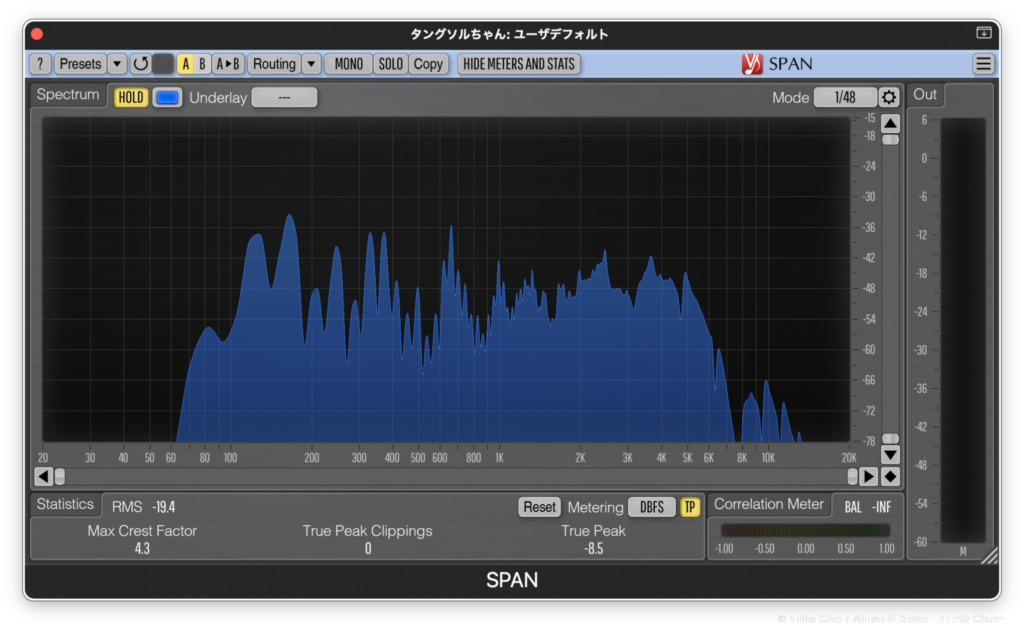
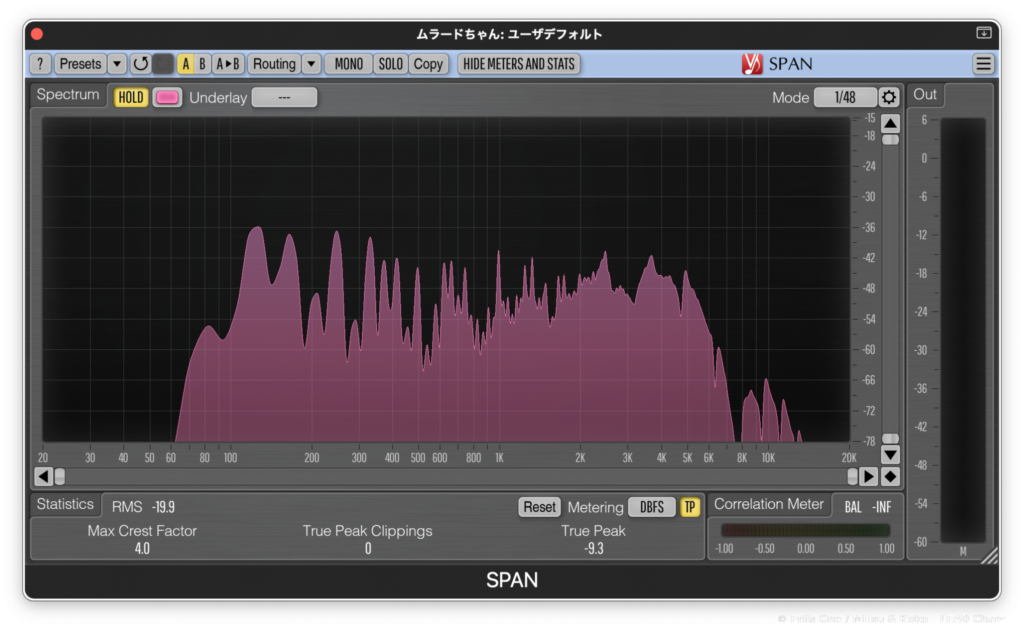
🟡 Yellow Line: TAD SET Preamp Tube (LEAD)
- Low (–120Hz)
Strong forward push with a slightly hard low end. More upfront than deep.
→ Tight and dry in character. Not very heavy, but very direct. - Low-Mid (200–600Hz)
Sharp peaks with plenty of power, but less smoothness.
→ Strong push-pull in the mids. Excellent for tight rhythmic playing. - High (1kHz–5kHz)
Very sharp picking response. Good cut, but can feel slightly piercing at times.
→ Strong presence. Attack-focused tone. - Overall Impression
Characterized by “hard, clear, and fast.” Even with rough gain, the contour remains clear.
→ Best suited for players who value precision and speed.
🔵 Blue Line: Tung-Sol Preamp Tube (LEAD)
- Low (–120Hz)
Slightly restrained but naturally sinking low end. Not flashy, but thick and stable.
→ More “supportive from below” than forward-pushing. - Low-Mid (200–600Hz)
Smooth and dense mids that feel natural to the ear. Harmonics are well balanced.
→ The sound never jumps out too much, maintaining a sense of depth. - High (1kHz–5kHz)
Attack is present, but never sharp or harsh.
→ Balanced presence, with very natural picking response. - Overall Impression
Even on the LEAD channel, the tone stays calm and controlled.
→ Smooth texture even with heavy gain. Perfect for mid-to-low focused playing.
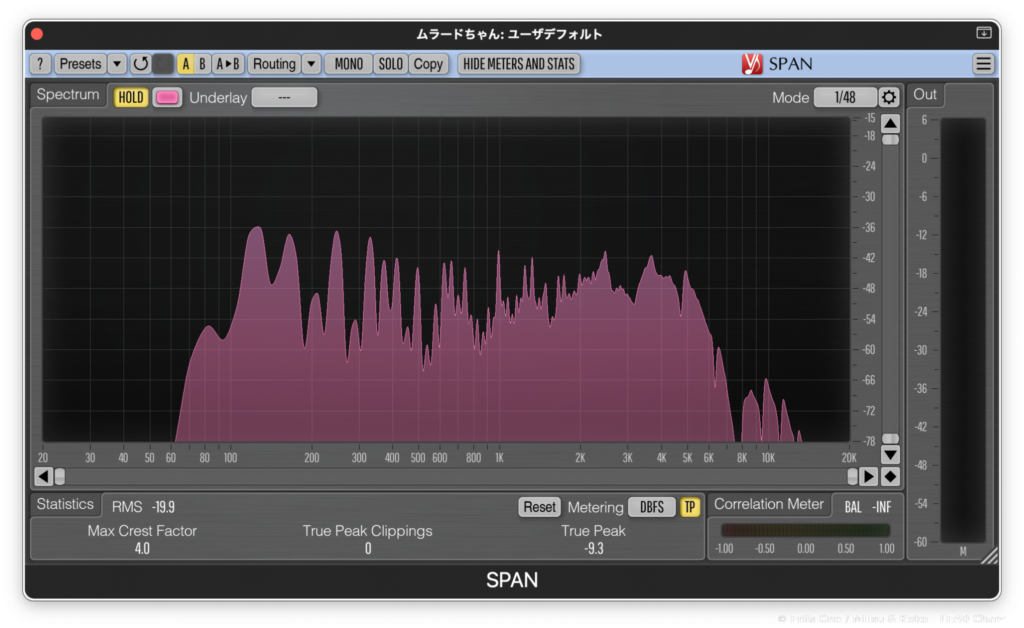
💗 Pink Line: Mullard Preamp Tube (LEAD)
- Low (–120Hz)
Modest in quantity, but soft and natural decay.
→ A low end that fades beautifully without bloating. - Low-Mid (200–600Hz)
Harmonics overlap beautifully, forming a rich and glossy midrange.
→ Adds emotion and sensuality to both chords and single-note lines. - High (1kHz–5kHz)
Slightly restrained and soft. Not sparkly, but naturally rounded.
→ Gentle attack that supports a singing, expressive feel. - Overall Impression
Even on the LEAD channel, it remains smooth and emotionally rich.
→ Distorted yet ear-friendly. The true essence of a “singing tube.”
| Category | 💗 Mullard | 🔵 Tung-Sol | 🟠 TAD (JJ Set) |
|---|---|---|---|
| Center of Gravity | Soft and sinking, with clean and natural decay | Naturally sinking, but restrained in depth | Forward-pushing with a slightly hard low end |
| Midrange Texture | Rich harmonics, smooth and sensual | Smooth and dense, calm tone | Sharp peaks, strong contours |
| High-End Character | Restrained and rounded, very ear-friendly | Present but smooth | Sharp and cutting, sometimes piercing |
| Sound Image | Soft and emotional, spacious resonance | Deep with natural spread | Clear and tight, slightly flat |
| Best For | Singing leads, emotionally expressive phrases | Calm riffs and solos focused on mids/lows | Shredding, tight riffs, power backing |
🎛 Logic Pro EQ Analyzer Comparison (ULTRA Channel)
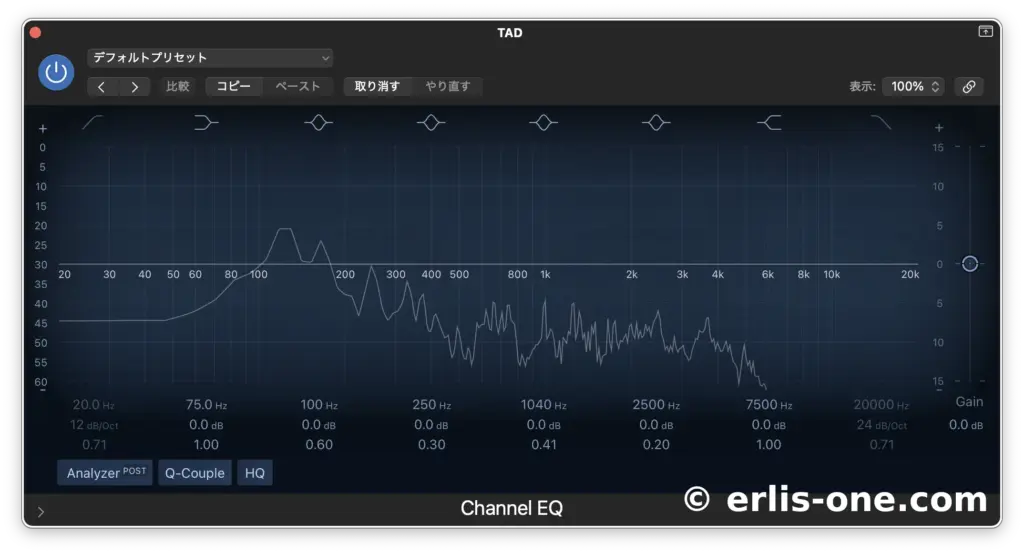
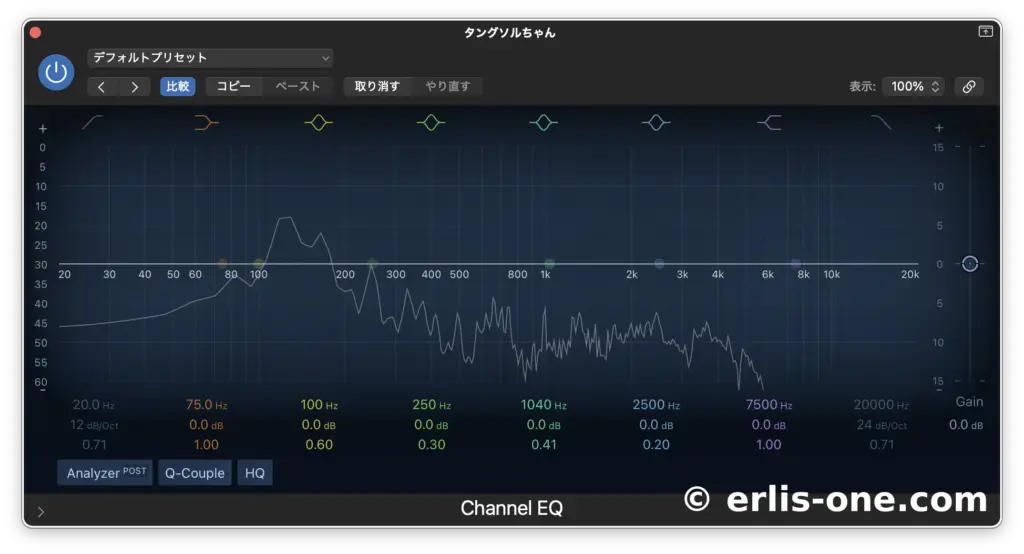
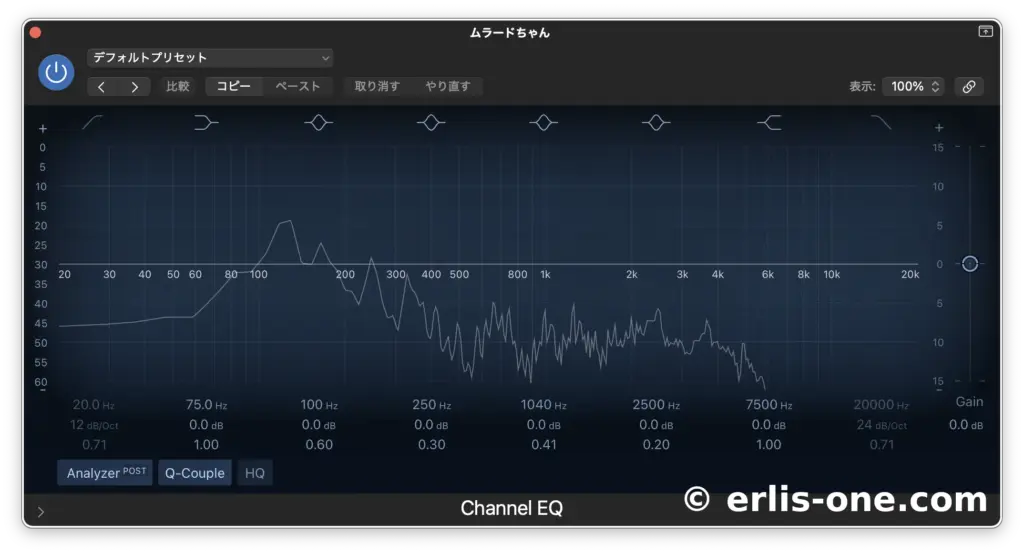
By analyzing the waveforms visualized in Logic Pro’s Channel EQ analyzer, the sound image characteristics of each preamp tube can be interpreted as follows.
🟡 TAD (JJ Type)
From low to mid frequencies, the response remains relatively flat, with few sharp dips or spikes. This matches the impression of a “well-structured yet non-aggressive balanced tone,” where no single band dominates. As a sound image, it feels slightly flat but well-organized, making it easy to place in a mix.
🔵 Tung-Sol
There is a natural rise around 100Hz–200Hz, with a slight dip in the 1kHz–2kHz range. The high-end slope is also gentle, visually confirming a calm and well-balanced tone. The smoothness and three-dimensional feel of the mids appear in the EQ as soft, flowing contours.
🩷 Mullard
The waveform shows a more complex series of peaks and valleys, especially in the midrange (around 400Hz–800Hz). This likely reflects the layered harmonics and glossy mids associated with a “singing” and “blooming” tone. Visually, it stands out with a strong sense of character.
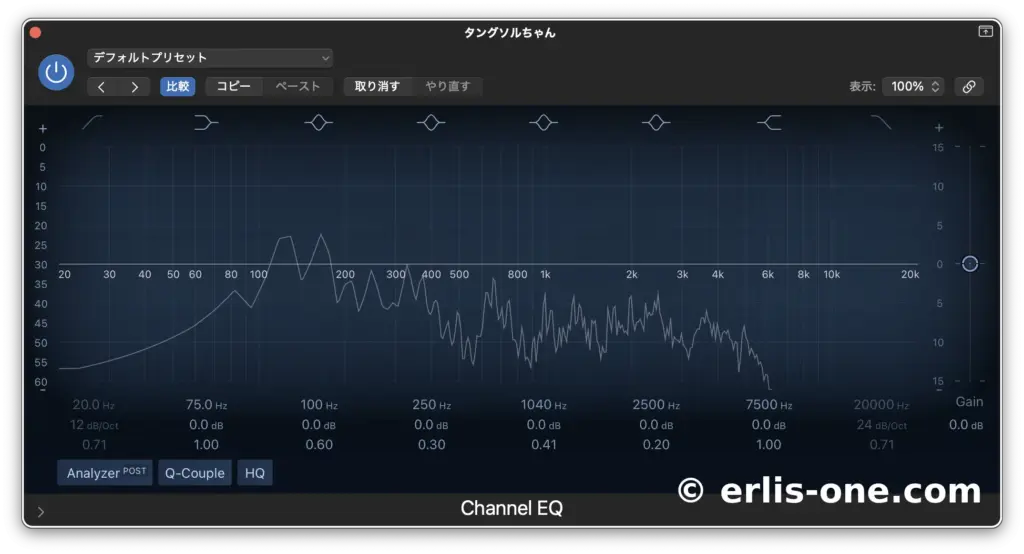
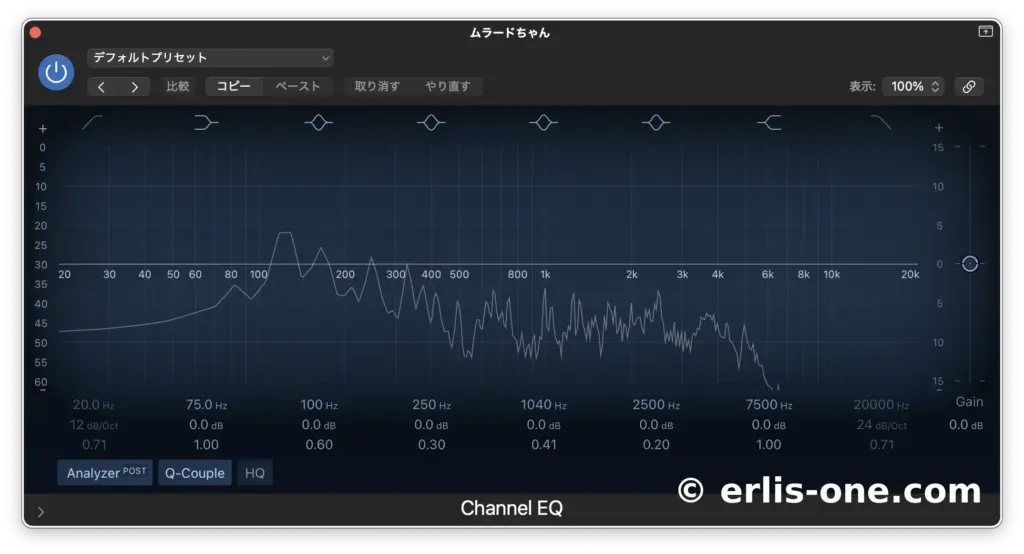
🎛 Logic Pro EQ Analyzer Comparison (LEAD Channel)
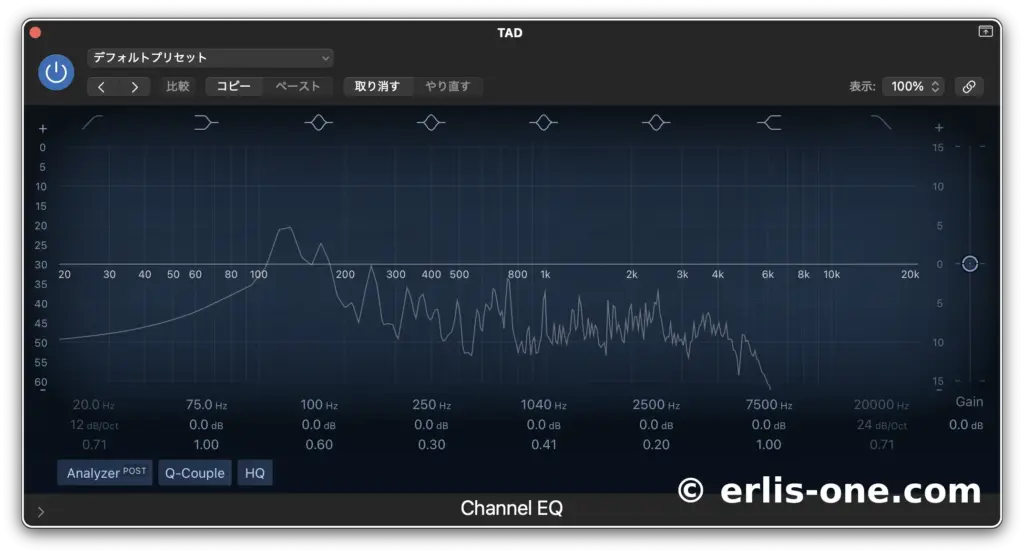
🟡 TAD
From low to mid frequencies, the overall balance remains flat and well-controlled, with no specific band standing out excessively. The picking attack sits slightly forward, but the tone is carefully managed so it never becomes too sharp. The sound image feels somewhat flat, yet it works perfectly for tight muting and rhythmic playing, maintaining a solid core even during fast passages.
🔵 Tung-Sol
There is a soft rise around 100Hz–200Hz, with the mids extending in a thick and natural way. A gentle dip around 1kHz–2kHz helps avoid harshness and creates a calm, relaxed tone. The high-end rolls off smoothly, resulting in a sound that feels spacious and three-dimensional. In solo playing, it does not push forward aggressively, instead winning with depth and smoothness.
🩷 Mullard
The midrange (around 400Hz–800Hz) shows complex and distinctive peaks and valleys, visually representing a “singing harmonic structure.” While the high end is restrained, the layered harmonics add richness and gloss. Across the entire waveform, there is no harshness, resulting in a gentle, emotionally expressive tone that emphasizes sustain and lingering resonance in lead playing.
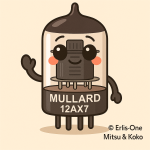 真空管くん
真空管くん🎤 “Hear that ‘juwaaaan’…? The sound stretches out and sings. Mura doesn’t ‘play’ — he lets it resonate.”
 ムラちゃん
ムラちゃん💗 “You know… there are sounds that reach you, even without playing hard.”
✏️ Summary:
- 🟡 TAD (JJ Set):
Clear and tight. Sharp contours, perfect for tight riffs and fast picking. A solid, hard-edged push. - 🔵 Tung-Sol:
Calm sound image with natural harmonics. Thick mids and a sense of depth that creates a spacious resonance. - 💗 Mullard (Mura-chan):
Moist, glossy tone with long, blooming leads. A “singing tube” that carries space and emotion in every note.
🧠 What We Learned from Listening, EQ, and SPAN Comparisons
- Differences like “how forward the sound feels” and “strength of contours” clearly appear in the EQ analyzer
- The beauty of harmonics can sometimes be read more easily from Logic EQ curves than from SPAN
- By comparing graphs with actual listening, the “sonic personality that doesn’t show up in specs” becomes much clearer
📌 Final thoughts:
The difference made by just one vacuum tube can completely change the sound.
That’s why finding “the one that matches your tone” can be a lifetime experience.
Vacuum tubes also play a major role in shaping tone color and picking nuance.
📌 All recordings, graphs, and images used in this article were created by
© erlis-one.com. Please contact us before linking or reusing.







コメント